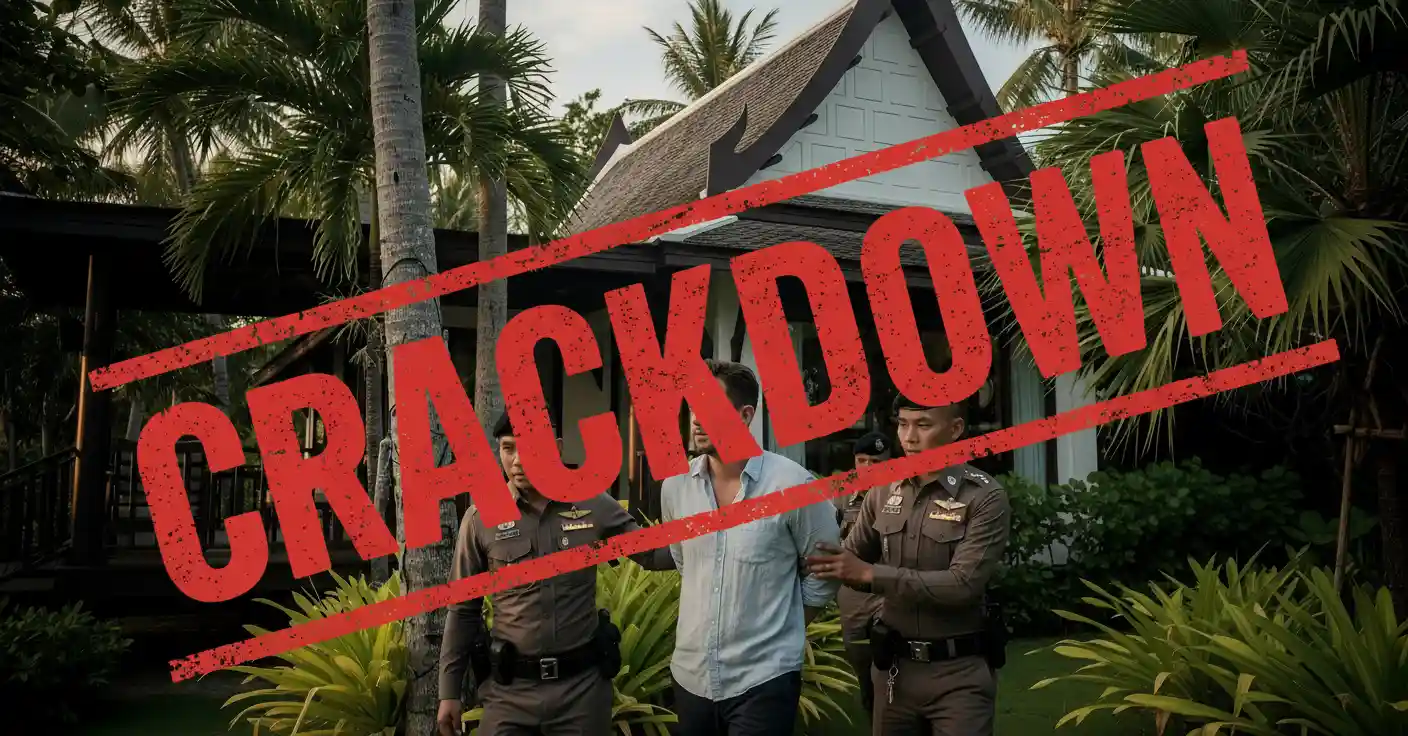
Thai authorities have intensified action against nominee companies on Koh Samui and Koh Phangan, launching coordinated checks after the Department of Business Development (DBD) flagged 7,000+ at‑risk entities. A provincial task force is inspecting landholdings, corporate structures, hotel licenses, and tax records. Here’s what changed, why it matters, and how to stay compliant.
Key Takeaways
- DBD flagged 7,000+ companies on Samui & Phangan as at risk of nominee arrangements; most are in real estate, hotels, restaurants, and tourism services.
- Inter‑agency task force convened on Oct 13, 2025 in Surat Thani to coordinate inspections across land, corporate, hotel, and tax records.
- New screening focuses on foreign shareholdings from 0.001% to 49.99% in six high‑risk sectors (nationally 46,918 entities), with ~1,000 prioritized for immediate probes.
- Enforcement uses a two‑stage model: on‑the‑spot arrests for clear violations, plus evidence‑based corporate investigations referred to relevant agencies.
- Expect more checks in Region 8 (Phuket, Krabi, Phang‑nga, Surat Thani) using the Surat Thani “blueprint.”
What Happened — and When
- Oct 14, 2025 (Khaosod English): Authorities announced an investigation into nominee businesses on Samui and Phangan. An inter‑agency task force—including the provincial commerce office, DBD, and the provincial land office—will cross‑check company data with land records and examine visas, permits, hotel and building compliance.
- Oct 15, 2025 (The Nation): The DBD stated that more than 7,000 businesses on the two islands are at risk of being nominee companies, largely tied to real estate and hospitality.
- Oct 16, 2025 (Thai Enquirer): Round‑up coverage linked the Samui/Phangan busts to a broader national push targeting suspected nominees and highlighted intensified enforcement.
How Screening & Enforcement Work (What’s New)
Beyond 51/49. The DBD’s revised screening now focuses on firms where foreigners hold 0.001%–49.99% equity in six high‑risk sectors, totaling 46,918 entities nationally. Roughly 1,000 are priority cases for immediate review. Investigators will assess beneficial control and economic reality, not just shareholder ratios.
Two‑Stage Operations.
1) Immediate action: arrests for clear violations (working without permits, reserved occupations, visa issues).
2) Evidence‑based inspections: deeper checks on company structure, source of funds, landholdings, hotel/building permits, and tax filings, with referrals to relevant agencies for prosecution.
Regional rollout. The Surat Thani model is set to guide wider checks across Region 8 (Phuket, Krabi, Phang‑nga, Surat Thani).
Why This Matters for Koh Samui Real Estate
For buyers, villa developers, and agents in the Koh Samui real estate market, enforcement risk has shifted from “theoretical” to immediate and operational. Authorities are actively verifying whether Thai shareholders have real capital at risk and whether foreigners exercise de facto control. Expect more on‑site checks at villas, boutique resorts, rentals, and property management firms—plus follow‑through on licensing and tax compliance.
Practical Compliance Checklist (Immediate Actions)
- Shareholding reality check: Ensure Thai shareholders have verifiable capital contributions and actual decision‑making, documented in minutes and bank evidence.
- Corporate hygiene: Keep up‑to‑date shareholder lists, paid‑up capital evidence, loan agreements, and service contracts organized and ready for inspection.
- License audit: Confirm hotel licenses, building permits, EIA/zoning, and house registration status for villas and short‑stay accommodations.
- Tax & payroll: Reconcile PND/PP filings, VAT, withholding, and SSO for all entities; align work permits/visas with job roles.
- Land records cross‑check: Match DBD company names to chanote/land office entries; fix inconsistencies proactively.
- Third‑party exposure: Review contracts with property managers, rental platforms, and marketing partners that could imply foreign control.
- Train front‑line staff: Have reception or villa staff ready with license and registration copies for inspectors.
Tip for international buyers/investors: If using a Thai corporate structure, consider a legal alternatives review (e.g., BOI routes, leasehold with registered usufruct/superficies where appropriate) with a qualified Thai lawyer.
Quick Data Points (Cite‑ready)
- 7,000+ businesses on Samui & Phangan are at risk of being nominees, largely in real estate, tourism, hotels, restaurants.
- Nationally 46,918 entities in six sectors fall under the new screening band (0.001–49.99% foreign share), with ~1,000 priority probes.
- Task force launched Oct 13, 2025 in Surat Thani, coordinating police, DBD, land office, and provincial officials; Region 8 rollout planned.
- 18 active nominee cases currently under investigation in Surat Thani (real estate/hotel/villa; plus construction, IT services, rentals, café, visa services, cleaning).
FAQ
Is it illegal for foreigners to own shares in a Thai company?
Not per se. The risk arises where structures conceal foreign control or benefit (a “nominee” arrangement) to circumvent the Foreign Business Act. The new screening looks at substance over form.
Does the crackdown target specific nationalities?
Officials stated the probe is not limited to any nationality; checks apply to all foreign‑linked entities and Thais who facilitate unlawful arrangements.
I operate a villa or boutique hotel—what will inspectors ask for?
Expect requests for company documents, capital/payment proof, work permits/visas, hotel & building licenses, and tax records. Discrepancies can trigger deeper nominee investigations.
Sources (Original Reporting)
- Thai Enquirer — “Authorities crack down on 7,000 suspected nominee companies amid multiple Koh Phangan busts” (Oct 16, 2025): https://www.thaienquirer.com/61318/authorities-crack-down-on-7000-suspected-nominee-companies-amid-multiple-koh-phangan-busts
- The Nation — “Over 7,000 suspected nominee businesses found on Samui and Phangan islands” (Oct 15, 2025): https://www.nationthailand.com/business/economy/40056825
- Khaosod English — “Thai Authorities Target Nominee Businesses on Koh Samui and Koh Phangan” (Oct 14, 2025): https://www.khaosodenglish.com/news/2025/10/14/thai-authorities-target-nominee-businesses-on-koh-samui-and-koh-phangan/